Supplier qualification · Facility and record verification
Factory evidence tour: verify areas, equipment and record context
This tour uses the same image—question—evidence matrix as the gallery. Each area starts with what buyers can see, identifies the controlled records still required and preserves the limits of visual review.
Which areas can be reviewed through the gallery?
Select a buyer question, inspect the corresponding scene and continue to the complete category when you need every assigned photograph.

Vial filling & capping
What can buyers verify about vial filling and capping?
The photographs show manual vial positioning, a filling nozzle and closure handling at processing stations.
Evidence still required: Request the applicable line-clearance record, equipment identification, approved instruction, component reconciliation and actual filling or capping record.
Boundary: The scenes do not establish filling accuracy, line speed, sterility, current equipment status or conformity of any offered batch.
Review all filling photographs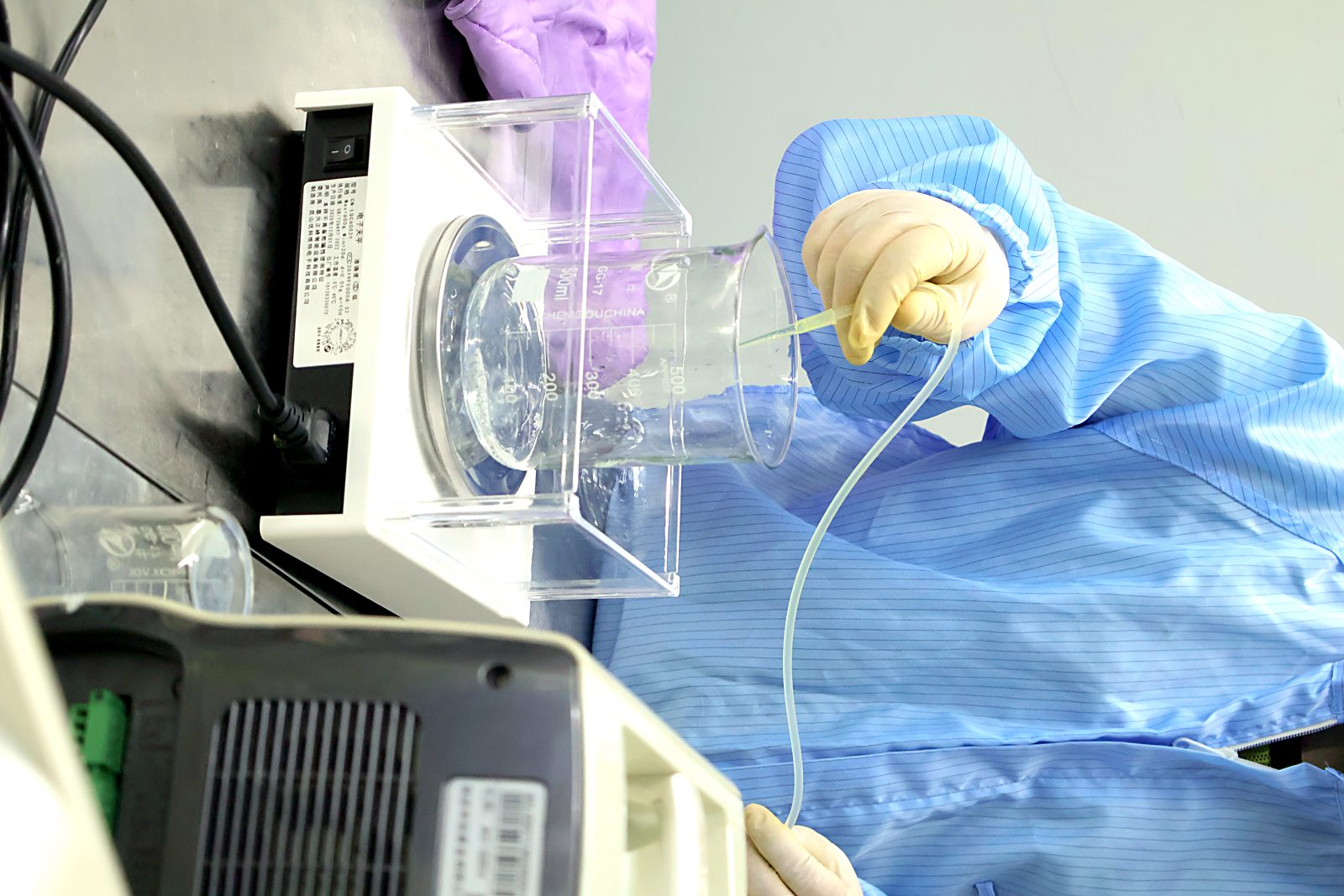
Weighing & dispensing
How is weighing and dispensing controlled?
The photographs show operators using balances and handling vials around weighing enclosures.
Evidence still required: Request material and batch identity, balance identification, calibration status, approved dispensing instructions and actual weight records.
Boundary: A balance or operator in view does not identify the material, verify a weight, demonstrate calibration or establish dispensing capacity.
Review all weighing photographs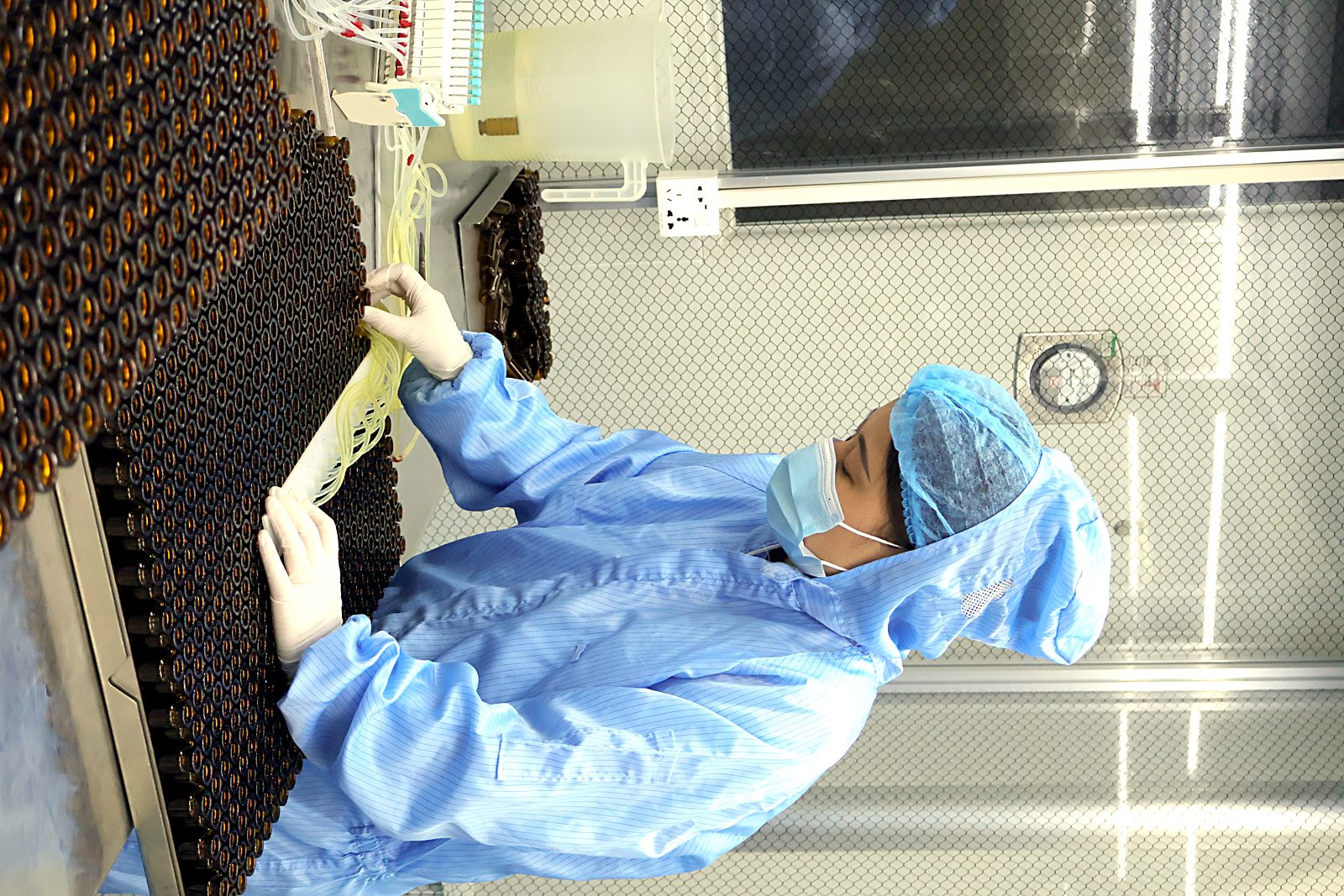
Vial trays & component handling
How are vials, trays and stoppers handled between operations?
The photographs show amber vials, capped vials, trays and gray stoppers being arranged or transferred by operators.
Evidence still required: Request component specifications, supplier and lot identification, preparation instructions, transfer controls and reconciliation records.
Boundary: Visible handling does not establish component cleanliness, sterility, container-closure integrity, batch identity or acceptance status.
Review all vial-handling photographs
Cleanroom production areas
What work areas and operator practices are visible?
The photographs show gowned operators working at shared tables and vial processing stations in finished production rooms.
Evidence still required: Request area identification and classification, applicable environmental monitoring, cleaning, gowning, personnel and process-control records.
Boundary: Garments and room finishes alone do not prove a cleanroom classification, current environmental control, validated status or sterile processing.
Review all cleanroom photographs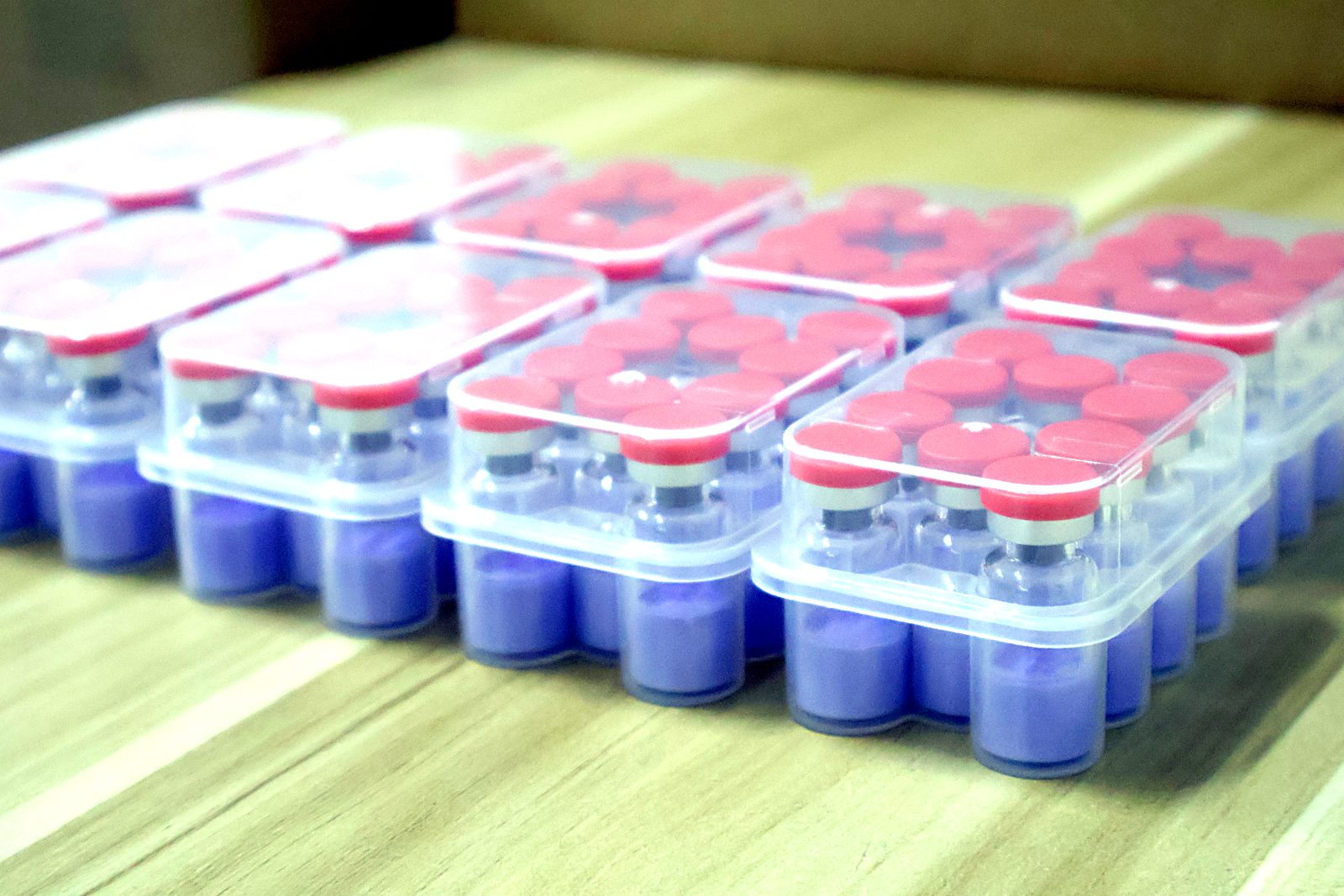
Packed units & packaging staging
How are packed units and packaging materials staged?
The photographs show capped vials in plastic trays, cartons and flattened packaging materials in packing or storage areas.
Evidence still required: Request batch and packaging reconciliation, approved artwork and label copy, packaging specifications, disposition and applicable shipping records.
Boundary: Packed units and cartons do not prove product identity, release status, market authorization, available inventory or shipment destination.
Review all packing photographs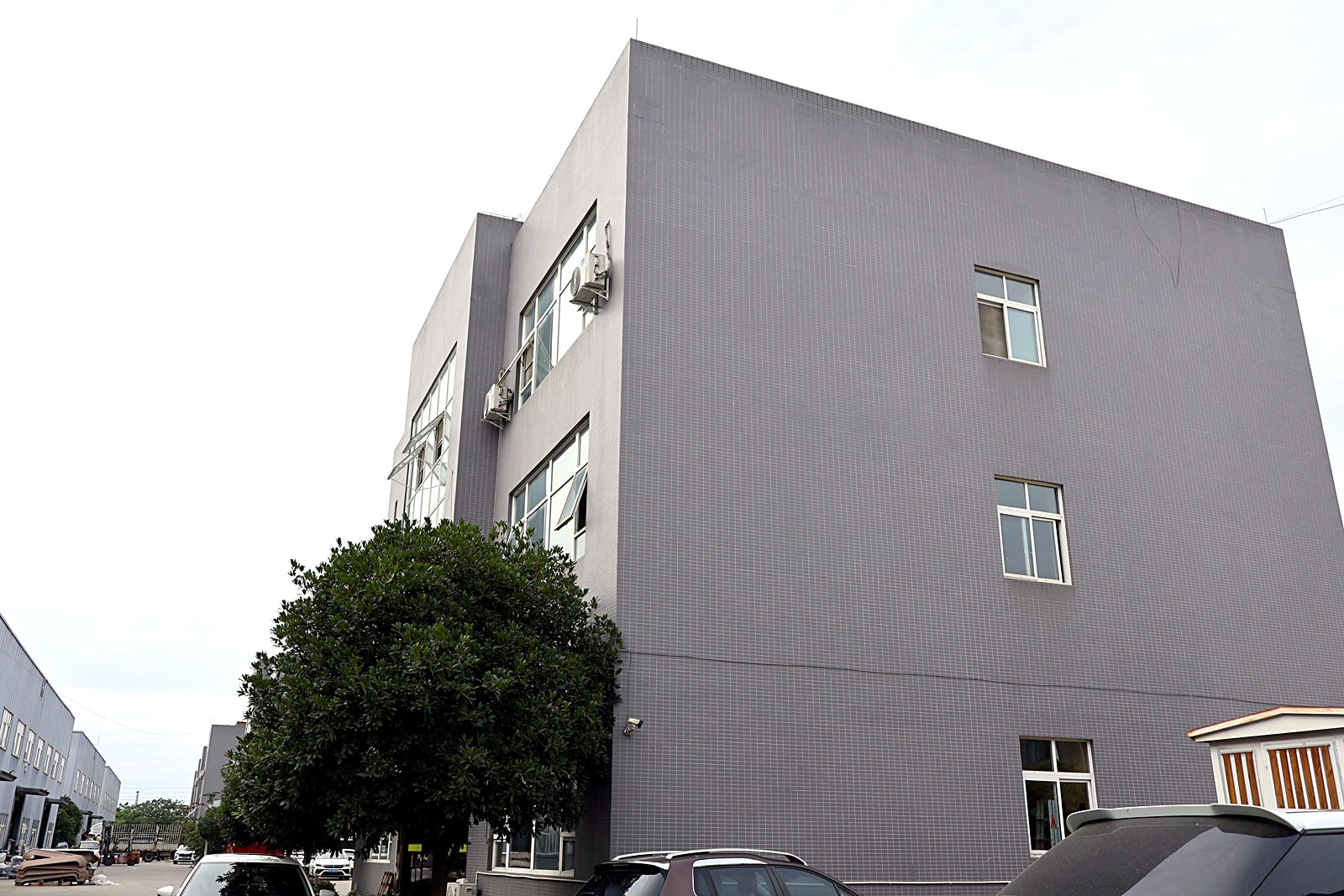
Manufacturing facility exterior
Which facility should be identified for supplier qualification?
The photographs show exterior views of an industrial building, including walls, windows, access doors and the surrounding frontage.
Evidence still required: Request the legal site name and address, entity-to-site relationship, original-media context and permission to verify the relevant areas during an audit.
Boundary: An exterior view does not establish legal ownership, occupancy, certification, current operations, production scale or the activities performed inside.
Review all facility photographsWhat turns an image into reviewable evidence?
The evidence chain must preserve source, context and limitations. This local template does not claim that the required registers or linked batch records have already been approved.
On narrow screens, scroll horizontally to compare all three columns.
| Record set | Required context | Review principle |
|---|---|---|
| Original-media register | Original file, capture date, site and area, rights, version and editing history. | Connect each published image to its source and permitted use; a filename or gallery category alone is insufficient. |
| Equipment register | Asset identifier, equipment name, location, applicable qualification and status records. | Match visible equipment to controlled records without inferring model, performance or availability from appearance. |
| Process and batch context | Approved instruction, material or batch reference, actual run record and deviations. | Establish what the depicted activity represents while protecting confidential information through controlled redaction. |
| Quality and release linkage | Applicable in-process results, analytical handoff and disposition records. | Separate visible activity from quality approval; a photograph cannot establish conformity or final release. |
| Audit scope and access | Areas, records, personnel, timing, redaction and access limitations. | Agree what a qualification call or audit can verify and record questions that remain open afterward. |
How should a buyer use this evidence tour?
- 1
Start with a qualification question
Select the entity, area, equipment, process or batch question that needs evidence rather than browsing images without an acceptance purpose.
- 2
Inspect the visual context
Use the gallery category to understand what is visible and list what the image does not establish.
- 3
Request linked controlled records
Ask for the relevant media, equipment, process or quality records with confidential information handled through an agreed review process.
- 4
Close or retain the evidence gap
Record the review outcome, remaining limitations and any audit action; do not convert an unresolved gap into a marketing claim.
Audit scope and evidence limitations: what remains open?
An approved asset register, equipment register, original-media register, capture and rights metadata, linked process and batch records, operating boundaries and agreed audit access are still required before indexing. This page is not a live virtual tour, a certification statement or proof of current operating status.
- Media access does not replace an independent audit or verification of current records.
- No freeze-dryer or purified-water equipment identity is inferred from filenames or unrelated photographs.
- Redaction may protect confidential information, but it should not hide unresolved exceptions or change the review conclusion.
- Process details belong to their dedicated pages, including lyophilization and packaging handoff.
- Legal entity and seller-role questions belong to the canonical company-facts register; batch disposition belongs to the quality control framework.